Why does the book ligga when I lägger it?
A short guide to ligga/lägga, stå/ställa and sitta/sätta
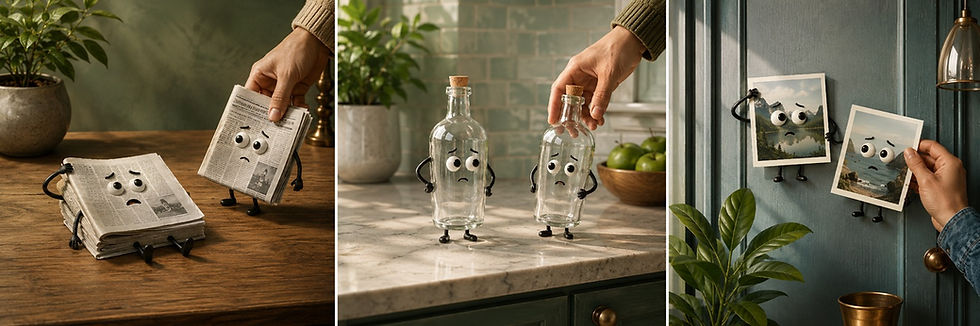
Some Swedish verbs come in pairs. One verb describes where something is. The other describes how it gets there.
And this is where many Swedish learners start looking at their coffee cup with deep suspicion.
Compare:
Koppen står på bordet.
(The cup is on the table. / The cup is standing on the table.)
Jag ställer koppen på bordet.
(I put the cup on the table.)
In the first sentence, the cup is already there. It is not doing anything dramatic. It is simply står there, having a fairly peaceful time.
In the second sentence, I am doing something with the cup. I am placing it on the table.
So:
står = is positioned
ställer = places something
Ligga or lägga?
Ligga is used when something is already positioned flat, horizontally, or down on or in something.
Examples:
Mattan ligger på golvet.
(The rug is on the floor. / The rug is lying on the floor.)
Halsduken ligger på stolen.
(The scarf is on the chair. / The scarf is lying on the chair.)
Kvittot ligger i jackfickan.
(The receipt is in the jacket pocket. / The receipt is lying in the jacket pocket.)
Lägga is used when someone places something flat, horizontally, or down on or in something.
Examples:
Jag lägger mattan på golvet.
(I put the rug on the floor.)
Hon lägger halsduken på stolen.
(She puts the scarf on the chair.)
Han lade kvittot i jackfickan.
(He put the receipt in the jacket pocket.)
Think of it like this:
Saken ligger.
(The thing is lying there.)
Någon lägger saken någonstans.
(Someone puts the thing somewhere.)
Stå or ställa?
The same principle applies here. Stå is used when something is already positioned upright or vertically.
Examples:
Lampan står i fönstret.
(The lamp is in the window. / The lamp is standing in the window.)
Fåtöljen står i hörnet.
(The armchair is in the corner. / The armchair is standing in the corner.)
Blomkrukan står på balkongen.
(The flowerpot is on the balcony. / The flowerpot is standing on the balcony.)
Ställa is used when someone places something upright or vertically.
Examples:
Jag ställer lampan i fönstret.
(I put the lamp in the window.)
Hon ställer fåtöljen i hörnet.
(She puts the armchair in the corner.)
Vi ställde blomkrukan på balkongen.
(We put the flowerpot on the balcony.)
Think of it like this:
Saken står.
(The thing is standing there.)
Någon ställer saken någonstans.
(Someone puts the thing somewhere.)
Wrong: Jag står lampan i fönstret.
(I stand the lamp in the window.)
Right: Jag ställer lampan i fönstret.
(I put the lamp in the window.)
The lamp står there and shines. You ställer it there and hope the cable reaches.
Sitta or sätta?
This one is a little trickier, because sitta can refer both to people and animals in a sitting position, and to things that are attached somewhere.
Sitta is used when someone is sitting, or when something is fixed, attached or positioned in a particular place.
Examples:
Jag sitter på trappan.
(I am sitting on the steps.)
Fågeln sitter på staketet.
(The bird is sitting on the fence.)
Magneten sitter på kylskåpet.
(The magnet is on the fridge. / The magnet is attached to the fridge.)
Prislappen sitter på tröjan.
(The price tag is on the jumper. / The price tag is attached to the jumper.)
Hårspännet sitter i håret.
(The hair clip is in the hair.)
Sätta is used when someone places something so that it ends up sitting, attached, inserted or in a specific position.
Examples:
Jag sätter mig på trappan.
(I sit down on the steps.)
Hon sätter magneten på kylskåpet.
(She puts the magnet on the fridge.)
Han satte prislappen på tröjan.
(He put the price tag on the jumper.)
De satte blommorna i vasen.
(They put the flowers in the vase.)
Think of it like this:
Personen eller saken sitter.
(The person or thing is sitting / attached / in place.)
Någon sätter personen eller saken någonstans.
(Someone puts the person or thing somewhere.)
The important difference
Here is the heart of it:
Ligga, stå and sitta describe the position or state.
Lägga, ställa and sätta describe the action.
It is the difference between the finished arrangement and a tiny grammatical removal company at work. The rug ligger, the lamp står and the magnet sitter. But someone has lagt, ställt and satt them there. After all, someone has to keep all these objects under control.


